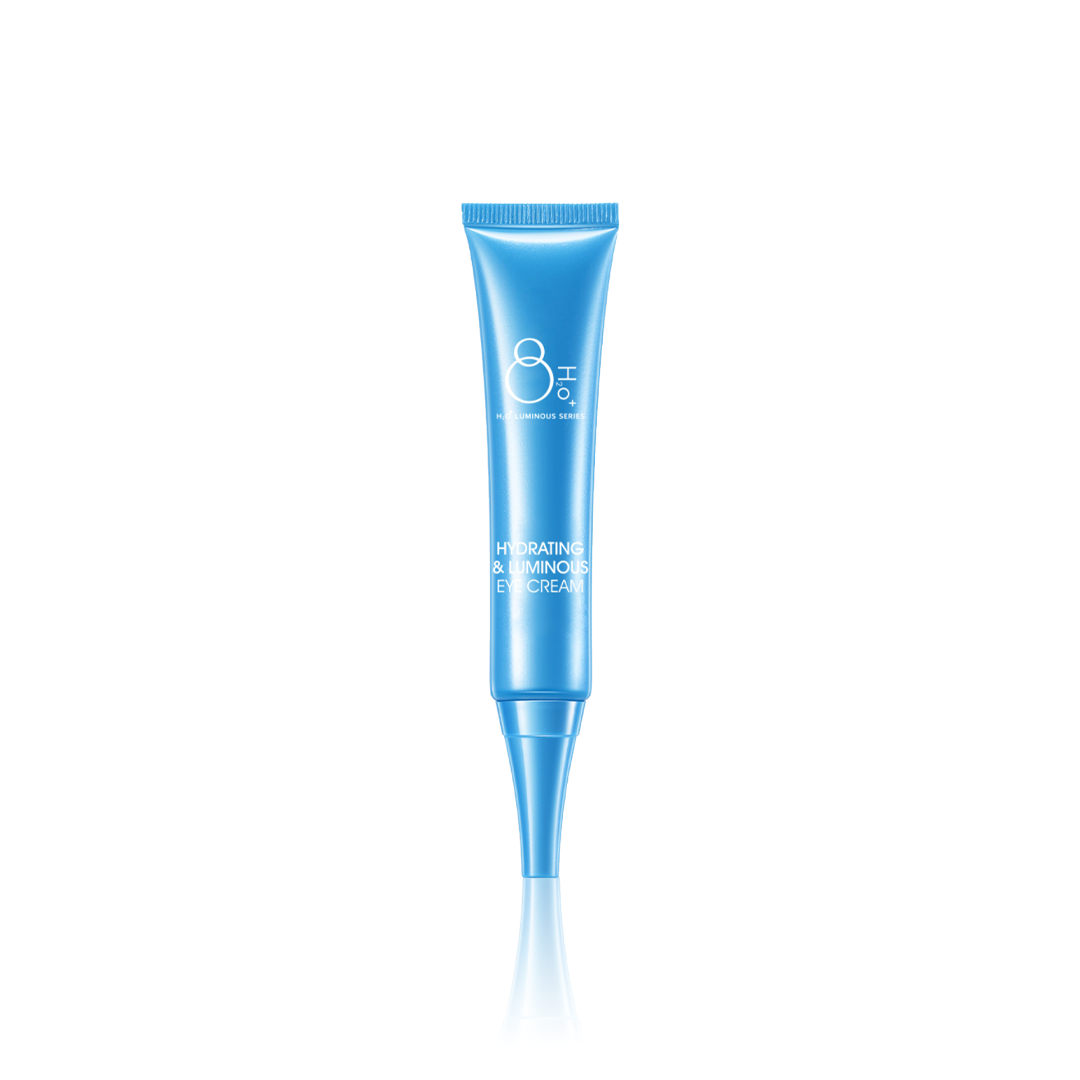
How to use an Eye Cream
- The skin around the eye is more fragile than the rest of your Therefore, it is prone to the early signs of ageing – the need for an eye cream is essential.
- The skin around your eyes undergoes constant movement (blinking and squinting). For this reason, it will be the first area to show lines and wrinkles.
- Fluid buildup under the eye, due to lifestyle and genetic factors, will cause puffiness and dark circles.
- A good eye cream will correct and protect fragile
Apply an eye cream within 2 minutes of removing your cleanser, after serum.
A soft, moist skin will absorb the eye cream more effectively and allow you to use a smaller amount.
Eye creams should be applied using the ring finger along the orbital bone. Place 1-2 dots of product and start at the inner corner of the eye. Then dab outwards along the orbital bone towards temples where crow’s feet are normally found. Avoid placing eye cream too close to your eyes because the product travels when it warms up.
INGREDIENTS
| KEY INGREDIENTS | BENEFIT |
| Hyaluronic Acid
Sodium Hyaluronate |
Hyaluronic acid is a substance produced by our bodies to hydrate skin. It is also created in laboratories for skin-care products that offer a plethora of benefits, such as strengthening the skin barrier and visibly reducing fine lines and wrinkles. |
| Tremella fuciformis extract
(Snow mushroom)
|
The ingredient holds an impressive 1,000 times its weight in water. tremella fuciformis, also known as snow mushroom, is a hydrating, plumping ingredient that acts like hyaluronic acid, since it also attracts moisture to the skin. |
| Glycerin | In skincare, glycerin’s most popular use is as a humectant. Humectants are moisturizing ingredients that work by drawing water from the atmosphere to hydrate and soften the skin (other well-known humectants include hyaluronic acid and d-panthenol).
|
| CLADOSIPHON OKAMUBANUS EXTRACT | It is an edible seaweed also called mozuku. In addition to being a food source, it has long been used in traditional medicine to tackle a variety of internal and external ailments. Research shows that applied topically, Cladosiphon okamuranus has a soothing effect. |
| DIPROPYLENE GLYCOL | Dipropylene glycol is a slip agent, texturizer, and solvent, the latter a common use when combined with plant extracts, since it enhances their penetration into skin. It is a byproduct made in the production of propylene glycol. Its raw form is a colorless, odorless liquid. |
| GLYCYRRHIZA GLABBA EXTRACT | Glycyrrhiza glabra (licorice) root extract is a plant extract that offers skin-soothing properties. In addition, it can be effective in improving the look of an uneven skin tone. |
| PROPYLENE GLYCOL | Propylene glycol is a humectant, which means that it is an ingredient that is added to cosmetics to increase moisture retention in skin and hair. |
| Dimethicone | Dimethicone is a gentle, effective moisturizing ingredient for both the face and body. It helps provide long-lasting skin-smoothing benefits, and is ideal for areas prone to rough, dry skin such as knees, elbows, hands and feet, and can help with certain skin conditions like eczema. |
| Sorbitan isostearate | Sorbitan Isostearate is an effective moisturizing and conditioning ingredient used in personal care products like lotions, creams, and makeup. It also has emulsifying properties, meaning it helps to mix oil and water-based ingredients together in a smooth and consistent way. |